Sunday, July 24, 2011
A Winter Sunday In South Africa
This is something I never expected to see in South Africa - a local hunt in full regalia - 'pink' coats and all. The baying of the hounds, the toot of the horn, as they set off in full pursuit of the scent... (no, not a fox, not even a wild dog, jackal or mountain lion, but a bundle of rags, freshly drenched in something revolting that I didn't enquire too closely into, that is dragged after the lead riders, who lay a trail for the hounds to follow)... was something out of a classic English country scene of fifty years ago, something I never once saw in thirty-five years of living in England and had to come all the way here to witness!
We took our girls and their friends, who are all pony crazy, to watch the hunt arrive at the mid-morning halt. We've been here 9 years without realising that we had a local hunt, only just down the road, hounds and all. The girls all fell in love with this Appaloosa. Then we went our separate ways: the Appaloosa cantering decorously off with the hunt and the girls leaping into their friends' car, abandoning me to return home to the boys alone.
So I took my camera outside to drink in the details of the day. The crazily warm and dry July we've had this year, has convinced all the trees and flowers that spring has sprung. My mulberry tree is bursting forth into leaf, pouring its energy into berry-making, heedless of the fact that we are only a month past the winter solstice.
The almond tree too is celebrating spring. it usually is the first to unfurl blossom, but I'm sure it's a good two weeks early this year. White daisies that usually show their faces in the first week in August have been partying in the grass already. We've even had to water this last week, it's been so dry. Unheard of in the middle of a Cape winter. Praying for rain soon...
The wind is blowing fiercely from the south-east, bringing a chill despite the blue skies, and baking is the only answer, warming the house and stocking up with essential goodies.
Rusks being the ultimate in South African essentials to keep on hand. Essential to dunk in tea or coffee, or to stow in a bag for mornings spent hunt-watching in chill winds. Here's the rusk recipe I use, just in case you're inspired to stock up yourself.
What did you do this Sunday?
Friday, July 22, 2011
Meatballs Are Meatballs
![]() |
| Sometimes the meatballs just want to be alone... especially on my son's plate...what's this green stuff doing here?! |
Meatballs are meatballs, right? Well I’ve just discovered that all meatballs are not equal. Not when you borrow a fine recipe from Scrumptious South Africa and re-model the Moroccan inspired mini-meatloaves into maxi meatballs, anyway.
Last minute supper plans yesterday had friends coming to us and bringing their trademark delicious vegetarian lasagne along to cook in our oven. So I was racking my brains, to think of something that could go with it, something that our son would eat (vegetarian lasagne ticks all his boxes when it comes to reasons to dislike a dish – vegetables, sauce and all mixed up and unable to be separated into its few edible parts, the pasta itself being the only qualifying one).
Eventually I remembered Nina’s post on mince recipes, that led me on to Juno’s mini-meatloaf recipe. It sounded delicious and I loved her idea of wrapping each mince parcel with bacon for extra tastiness and tenderness. Unfortunately I forgot to buy bacon. So the mini meatloaves transformed into maxi meatballs and ended up working beautifully, baking alongside the lasagne in the oven. They also did go very well together on the plate, for those of us who would eat both. It actually turned out to be the perfect combination for a table made up of a couple of vegetarians and a dedicated vegetable-hater, as well as the omnivores in between: taking the meat out of the lasagne and serving it separately was how one of our friends put it!
The meatballs were soft and tender, with a wonderful mix of Moroccan-inspired spices adding interest to the potentially bland meat: scents of coriander and cinnamon create a warm complexity with the cumin and I will definitely be adding this one to the family repertoire.
I’m not going to re-produce the recipe here, as I followed Juno’s recipe almost exactly, except for the modelling of the mince patties and you can get all the details from her.
All I did differently was to make the mince into about 16 large balls instead of the 8 tennis ball size that she suggests, then I baked them in a roasting tin together, just about touching, but not squashed, so that they kept their shape but didn’t dry out. I also left out the peppers and used carrots instead of celery, just because I was aiming for my son to eat them and not pick all the bits out! I left out most of the optional hot spices – Tabasco and cayenne - just using a pinch of each for interest, and ended up with perfectly child-friendly mega meatballs that went down a storm with all but the vegetarians!
Tuesday, July 5, 2011
Sag Aloo – My Indian Cooking Quest
Now that Lamb dopiaza (made with beef!) and Aloo gobi have made it into my repertoire of regular family recipes, I’m on the lookout for more easy and tasty Indian recipes. I’ve set myself an ambitious target. My husband’s 50th is fast approaching. The usually suspects are invited for supper, then to be inveigled into boogying on down to some classic 70s and 80s music. He is really enjoying the spices that are finding their way into ordinary weekday suppers, now that the kids are developing slightly more adventurous palates. So it’s going to be an Indian supper for about 24, half adults, half kids. My idea is to have lots of different dishes, buffet style and I’ll need to cook most of them in the morning to be warmed up later, so they need to re-heat well.
We’ve got so much lovely fresh spinach growing in the garden that it was a no-brainer to add Sag Aloo to the list. We arrived back rather late in the afternoon from the children’s various activities yesterday (one girl off on pony camp yesterday, the other with her friend to a course at the Aquarium, son reduced to his computer, book and table tennis with Dad, as his cricket course is only next week). The sun was setting, so there was a flurry of getting in washing before it got damp again, before settling down to chopping onions for the lamb dopiaza. A desultory exploration of Google came up with Sag Aloo recipes that didn’t really inspire – none of them expected fresh spinach to be used and the spices didn’t quite ring true. And then I returned to my Madhur Jaffrey book, finding the authentic original Sag Aloo recipe there after all, listed simply as spinach and potatoes.
It seemed that most of the recipes I’d found via Google had started off from her recipe, but cut things down or out. The biggest difference is in the amount of oil she stipulates – 6 tablespoons to cook one chopped onion in. No wonder the low fat brigade left out most of it. But going back to the original recipe gives you a chance to try it as it is meant to be. All that oil disappeared as soon as the chopped wilted spinach was added, allowing the mellowed onion flavour to be absorbed into the otherwise rather bland spinach leaves. It was delicious just as she describes. Its child-friendly score in our family was only 1/3, but my husband loved it and so did I.
So without more ado, here is Madhur Jaffrey’s original recipe, oil and all.
Sag Aloo Recipe
Ingredients
About 900g 2lb potatoes (waxy if you have them)
450g / 1lb fresh spinach or 1 pack frozen leaf spinach
6 tablespoons vegetable oil or ghee
½ teaspoon whole black mustard seeds
1 large onion chopped quite fine
2 cloves garlic finely chopped
1 teaspoon garam masala
Pinch cayenne pepper (optional)
Bring a medium pot of water to the boil. Peel the potatoes and dice them into cubes of about 2cm/ ¾ inch. When the water is boiling add the potatoes and 1 tablespoon of salt. Return to the boil, cover the pot and lower heat so that they simmer gently until just tender – about 6 minutes or so. Drain the potatoes carefully and allow them to cool and dry. Be careful not to overcook them as they can fall apart to a mush.
Wash the spinach well (if fresh) and drop it into a large pan of boiling water. Leave it in just long enough for it to wilt, then drain it. Squeeze out as much water as you can and chop it fairly finely.
Heat all the oil in a large heavy based frying pan over a medium high heat. When it is really hot test it by dropping in a mustard seed. If it pops almost immediately it is ready. Add the rest of the mustard seeds and then as soon as they are popping add the chopped onion and garlic. Reduce heart slightly to medium and fry, stirring now and then, until the onions are just starting to turn a light brown at the edges. Don’t let them get dark brown or burn or the flavour will permeate everything.
Add the spinach and stir in well, cooking and stirring often for another 10 minutes.
Now add the cooked potatoes with the garam masala, a teaspoon of salt and the pinch of cayenne. Stir everything together gently until the potatoes have warmed through.
Now I’m on the hunt for a good Naan bread recipe – one that isn’t going to cause too much last minute stress. But I guess I’ll try out Madhur Jaffrey’s recipe before i look any further, unless any of you have a great recipe I should try?
Thursday, June 30, 2011
Risotto and A Marcella Hazan Recipe
Jeanne at Cooksister wrote a great post on risotto recently, covering all the important points of cooking one properly and featuring a version of a Jamie Oliver recipe, which started me off reminiscing on my own risotto journey.
Back in the mists of time when I was a student in Exeter, a group of us from the Italian department went out for a celebratory end of year meal at the local Italian restaurant. Having recently spent a year in Rome as part of the course, I fancied I’d learned more than just language there. My Italian boyfriend had broadened my education to include (besides a colourful variety of parolacci - Italian swear words!) the works of Caravaggio, Italian cinema and an appreciation of proper Italian food, none of which he cooked himself unfortunately, but in those days it was cheap enough to eat out quite often in the trattorias around Trastevere. I’d unsuspectingly been given fried brains to try (delicious!), had eaten spaghetti alla carbonara that would never be matched and all sorts of good plain Italian fare.
In that would-be Italian restaurant in Exeter the menu proudly offered risotto. Remembering some of the delicious creamy plates of risotto I’d enjoyed in Italy, I ordered it with anticipation, looking forward to a nostalgic culinary trip back to the previous year. I choked in disappointment when in front of me was placed a plate of boiled rice with several generous dollops of a tomato-based sauce piled in top. Sacrilege! How could a restaurant claiming to be Italian produce such a thing! Being shy and English I didn’t say a word, but tried to eat it, though every mouthful of strident tomato mixed with bland rice was a painful reminder of what I was missing.
That was the Eighties. Now practically every Modern English or Modern European restaurant in Britain can cook a half decent risotto. Jamie Oliver has made sure that we all know what to expect of a risotto and no Italian restaurant would dream of serving up such a cheat of a dish.
In a way that meal did me a favour. Not that much later I discovered the books of Marcella Hazan, the voice of authentic Italian cooking in the English speaking world, and taught myself how to cook risotto properly. I discovered that by following her recipes faithfully I could recreate the tastes of Italy quite easily, so was no longer dependant on anglicised Italian restaurants for my nostalgia trips. Recently I was very happy to discover that Marcella Hazan is still actively writing and championing good home-cooked Italian food on the Hazan family food blog An Educated Palate, and I am still just as much a fan of her recipes as ever, using my original three books every week for one or other of my favourite recipes.
For me the difference between Marcella’s recipes and, say, Jamie Oliver’s is that hers really do taste of Italy. His are good too, but they are creative rather than authentic and they just don’t take me back to any of the hundreds of trattorias and ristorantes that I enjoyed eating in during my years of working and travelling in Italy. Perhaps because a risotto in Italy is only one part of a meal, it can afford to be simple, showcasing just one clear flavour rather than trying to be a meal in itself and cramming in several principal ingredients, as we are often tempted to do when we serve a risotto as a main course on these English-speaking shores!
The risotto recipe that I turn to again and again in Marcella Hazan’s The Second Classic Italian Cookbook is a very simple celery risotto. Surprisingly enough my girls love it (my son loves rice but hates risotto and chokes down his small obligatory portion smothered in baked beans...!). The celery flavour is clear and fresh and there are no distractions, resulting in a wonderful creamy comforting plate of velvet risotto with a little celery crunch and pale elegant colour. It should really stand as an introduction to second course where you could serve something a little more colourful and complex, but we are usually happy enough with this and maybe some salad for supper.
Risotto Col Sedano – Celery Risotto Recipe
1litre / 2 pints good home-made stock or bouillon
1 medium onion chopped
2 tablespoons vegetable oil
60g / 2oz butter
200g / 7oz celery finely diced
1 tablespoon celery leaves chopped fine
300g / 10 ½ oz Italian Arborio rice
30g / 1 oz freshly grated parmesan
1 tablespoon chopped parsley
Heat the broth in one pan, so that is only just simmering.
In a heavy bottomed pan or casserole, put the chopped onion with all the oil and 30g of the butter. Sauté the onion over a medium heat until golden and translucent, but don’t let it catch, as the burnt flavour will spoil the whole risotto.
Add half the chopped celery and all the chopped leaves and continue to cook, stirring occasionally for 3 more minutes.
Add the rice and stir to coat thoroughly. Add a good ladleful of hot broth and stir continuously as the rice absorbs the broth. The heat should be medium. Too hot and the broth will evaporate too quickly before being absorbed and too low it will take forever to cook through. Keep adding more broth as the last lot is absorbed and stir continuously.
After 10 minutes of cooking, add the remaining celery. Continue cooking and stirring and adding broth until the rice is tender and creamy. This can take anything from 20-35 minutes depending on the type of rice you are using. You may need more liquid, in which case just use hot water.
Once the rice is tender to the bite, with no chalkiness left in the middle, it is done. Stir in the remaining butter and the grated parmesan. Check for salt. Turn off the heat and sprinkle over the parsley then serve the risotto promptly.
Also have a look at Jeanne's post for some good general tips on risotto making.
Back in the mists of time when I was a student in Exeter, a group of us from the Italian department went out for a celebratory end of year meal at the local Italian restaurant. Having recently spent a year in Rome as part of the course, I fancied I’d learned more than just language there. My Italian boyfriend had broadened my education to include (besides a colourful variety of parolacci - Italian swear words!) the works of Caravaggio, Italian cinema and an appreciation of proper Italian food, none of which he cooked himself unfortunately, but in those days it was cheap enough to eat out quite often in the trattorias around Trastevere. I’d unsuspectingly been given fried brains to try (delicious!), had eaten spaghetti alla carbonara that would never be matched and all sorts of good plain Italian fare.
In that would-be Italian restaurant in Exeter the menu proudly offered risotto. Remembering some of the delicious creamy plates of risotto I’d enjoyed in Italy, I ordered it with anticipation, looking forward to a nostalgic culinary trip back to the previous year. I choked in disappointment when in front of me was placed a plate of boiled rice with several generous dollops of a tomato-based sauce piled in top. Sacrilege! How could a restaurant claiming to be Italian produce such a thing! Being shy and English I didn’t say a word, but tried to eat it, though every mouthful of strident tomato mixed with bland rice was a painful reminder of what I was missing.
That was the Eighties. Now practically every Modern English or Modern European restaurant in Britain can cook a half decent risotto. Jamie Oliver has made sure that we all know what to expect of a risotto and no Italian restaurant would dream of serving up such a cheat of a dish.
In a way that meal did me a favour. Not that much later I discovered the books of Marcella Hazan, the voice of authentic Italian cooking in the English speaking world, and taught myself how to cook risotto properly. I discovered that by following her recipes faithfully I could recreate the tastes of Italy quite easily, so was no longer dependant on anglicised Italian restaurants for my nostalgia trips. Recently I was very happy to discover that Marcella Hazan is still actively writing and championing good home-cooked Italian food on the Hazan family food blog An Educated Palate, and I am still just as much a fan of her recipes as ever, using my original three books every week for one or other of my favourite recipes.
For me the difference between Marcella’s recipes and, say, Jamie Oliver’s is that hers really do taste of Italy. His are good too, but they are creative rather than authentic and they just don’t take me back to any of the hundreds of trattorias and ristorantes that I enjoyed eating in during my years of working and travelling in Italy. Perhaps because a risotto in Italy is only one part of a meal, it can afford to be simple, showcasing just one clear flavour rather than trying to be a meal in itself and cramming in several principal ingredients, as we are often tempted to do when we serve a risotto as a main course on these English-speaking shores!
The risotto recipe that I turn to again and again in Marcella Hazan’s The Second Classic Italian Cookbook is a very simple celery risotto. Surprisingly enough my girls love it (my son loves rice but hates risotto and chokes down his small obligatory portion smothered in baked beans...!). The celery flavour is clear and fresh and there are no distractions, resulting in a wonderful creamy comforting plate of velvet risotto with a little celery crunch and pale elegant colour. It should really stand as an introduction to second course where you could serve something a little more colourful and complex, but we are usually happy enough with this and maybe some salad for supper.
Risotto Col Sedano – Celery Risotto Recipe
1litre / 2 pints good home-made stock or bouillon
1 medium onion chopped
2 tablespoons vegetable oil
60g / 2oz butter
200g / 7oz celery finely diced
1 tablespoon celery leaves chopped fine
300g / 10 ½ oz Italian Arborio rice
30g / 1 oz freshly grated parmesan
1 tablespoon chopped parsley
Heat the broth in one pan, so that is only just simmering.
In a heavy bottomed pan or casserole, put the chopped onion with all the oil and 30g of the butter. Sauté the onion over a medium heat until golden and translucent, but don’t let it catch, as the burnt flavour will spoil the whole risotto.
Add half the chopped celery and all the chopped leaves and continue to cook, stirring occasionally for 3 more minutes.
Add the rice and stir to coat thoroughly. Add a good ladleful of hot broth and stir continuously as the rice absorbs the broth. The heat should be medium. Too hot and the broth will evaporate too quickly before being absorbed and too low it will take forever to cook through. Keep adding more broth as the last lot is absorbed and stir continuously.
After 10 minutes of cooking, add the remaining celery. Continue cooking and stirring and adding broth until the rice is tender and creamy. This can take anything from 20-35 minutes depending on the type of rice you are using. You may need more liquid, in which case just use hot water.
Once the rice is tender to the bite, with no chalkiness left in the middle, it is done. Stir in the remaining butter and the grated parmesan. Check for salt. Turn off the heat and sprinkle over the parsley then serve the risotto promptly.
Also have a look at Jeanne's post for some good general tips on risotto making.
Monday, June 27, 2011
Mulled Wine Recipe
Jen asked for my mulled wine recipe, mentioned in passing in my winter festival post.
Spicy aromas of cloves, cinnamon and nutmeg wafting from mugs of hot wine, hands clasped around mugs to warm them, cold winter air and warm fire: there is something about mulled wine / gluhwein / vin chaud that evokes the best part of winter, a comfort blanket for your taste buds. Certainly at our last winter festival it went down very well, the pot drained dry in no time, leaving me making a note to double the quantities next year.
It’s more of a method than a recipe. I do most of it to taste, so don’t have exact quantities for everything, but that’s half the fun of it: tasting a sip now and then as it brews, the spices getting headier with the warmth, adjusting the sugar quantities, so that the acid edge is softened but without it getting sickly sweet and cloying.
Choose a red wine that is drinkable for a start. This isn’t a way of disguising a disgusting plonk, but rather a way of adding to a good well bodied wine. Having said that there is no point using a fine wine of complex structure and subtle notes either. Strong wines aged in oak and full of tannin tend to challenge the spices with too much of their own personality. So the best I’ve found is a simple but medium bodied claret, affordable but not dirt cheap. Here in South Africa I use the Drostdy-Hof Claret Select which now comes in boxes, making it affordable enough for our large gatherings.
Ingredients
4 litres red wine
2 oranges
20 - 30 whole cloves
3-4 sticks cinnamon
½ a nutmeg grated finely
Sugar
Decant the wine into a large pot. Press the cloves into the skin of the oranges so they are studded on both sides. Cut the oranges in half and float them in the wine. Add the cinnamon sticks and grated nutmeg.
The sugar needs to be added to taste, so start with about a cup and taste again when that has warmed and dissolved. The idea is to take the sharpness from the edge of the wine, but not to get too sickly sweet. Always start with less sugar and add a bit more once the wine has warmed until you’ve got the right balance.
Warm the wine over a medium heat, stirring occasionally. Bring it to a point where it is steaming and a few small bubbles are breaking the surface. DON’T LET IT BOIL or all the alcohol will evaporate! Keep it gently steaming over a low heat for about an hour to draw out the flavour of the spices.
Taste the wine every now and again and add a little more sugar if necessary or a little more spice. The spice will mellow and develop as the wine mulls, so expect the flavour to improve and deepen over the time it is brewing.
I don’t add anything else. Some other recipes do add fruit juice and brandy, but I like the simplicity of this with just a little fruit note added by the oranges and the warm aroma of spices lifting the spirits. Ladle into mugs and sip steadily before it cools.
Monday, June 20, 2011
Winter Festival - Fire and Light and Pots of Food
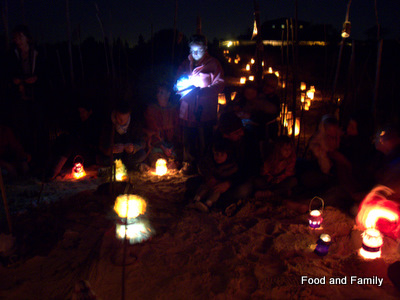
Our midwinter celebration, a festival of fire and light, giving kids old and young a chance to play with sparklers, make lanterns, sit mesmerised around a bonfire cradling mugs of hot soup and mulled wine, watching sparks fly into the air to join the stars.
By some miracle, year after year, we manage to have an evening that is clear and still, and this year too, the wind dropped on cue, the rain held off till after midnight, when everyone was already tucked up in bed and the bonfire burned in fine style.
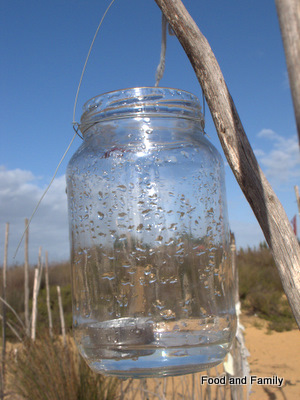
As we sat in the circle, the kids with lanterns parked in front of them, others hanging theirs on the sticks to make a colorful dancing circle of light around us, we read our blessings and St Francis' prayer, the girls sang the St Johns song that they all know from Waldorf school and there was a wonderful peaceful quality in the air.
Then it was time for sparklers, hot chocoolate, mulled wine and lighting the bonfire.
I needed my biggest pots – we had 45 people, 20 of them children, who were on hot chocolate, but even so the mulled wine vanished in a flash from my big stockpot. All the mugs from all three houses were requisitioned and we ate soup from mugs, moving on to sausage and boerewors rolls as the stalwart braai team produced them.
I’m going to need to invest in more pots if we have this many people next year – the lentil soup went down so well that the poor old braai master (my husband) only got one, not full, mug and no seconds and the mulled wine also ran out before he got a chance for seconds of that too... proof that everyone enjoyed it of course!
So I’ve made notes for next year, but there’s no guarantee that I’ll find that piece of paper or even remember that I did make notes – so reminder to self: make more soup and more mulled wine next year!
The rain poured down all night, putting out the fire very thoroughly and washing the colour from the crepe paper decorated lanterns.
When the sun came out in the afternoon the sandpit was washed clean of footprints and had taken on another form of beauty – the calm after the storm.
Thank you to all our friends for joining us and making this such a special occasion for all of us!
Wednesday, June 15, 2011
Aloo Gobi - The recipe
“She helped me wash the net curtains and she made lovely aloo gobi last week. ...”
Ever since watching Bend It Like Beckham ( a movie we loved so much when we first got the DVD that we watched it ten times in a row), I’ve had a vague desire to learn to make aloo gobi myself. I didn’t actually know what it was, but it sounded so satisfying, especially when Jess’ mother pronounced it. But I was cooking for small kids at the time and the most adventurous we got was chicken korma.
A few weeks ago I was researching some Indian recipes for a client and the aloo gobi quote popped immediately into my mind. Once the articles were despatched, I was left with several mouth-watering recipes begging to be tried out. The lamb dopiaza recipe I’ve already written about, so now I have to share the aloo gobi recipe with you, which was a revelation to me.
Cauliflower has never been a favourite vegetable for anyone in the family, so I knew I was taking a risk serving it up, even combined with the potatoes, which my family love in most guises. But I got away with it! Maybe because the cauliflower florets were small, just a little bit cooked out of shape and the same colour as the potatoes when coated with spices, but the girls gobbled up the aloo gobi without a protest. (Our son of course never touched it in the first place, but then I knew that was too much to expect.) I thought I was home and dry. Unfortunately the next time I cooked it they cottoned on and separated out the cauliflower pieces; my dastardly plot foiled...!
Anyway we loved it, deep spice flavours adding intensity to the bland vegetables but still allowing the creamy nuttiness of fresh cauliflower to come through. The recipe I eventually found is authentically Indian and though I have most of the spices, I don’t have asafoetida or mango powder. So I left them out and used a squeeze of lemon juice to add a touch of light acidity instead of the mango powder.
![]() |
| Lamb dopiaza and aloo gobi go really well together |
Recipe for Aloo Gobi
Ingredients
2 cups cut cauliflower florets
2 medium potatoes
2 cm fresh ginger root shredded
3 teaspoons ground coriander
¼ teaspoon turmeric
¼ teaspoon cayenne pepper
3 tablespoons oil
3 tablespoons water
Pinch asafoetida (optional)
1/2 teaspoon cumin seeds
2 green chillies
2 bay leaves
1 teaspoon salt
1 teaspoon mango powder (amchoor)
2 tablespoons chopped coriander leaves
Mix the shredded ginger, coriander powder, cayenne and turmeric together in a small bowl then add the 3 tablespoons water to make a paste.
Heat the oil in a pan. When it is hot enough, a cumin seed dropped in will crack immediately. Add the cumin seeds and asafoetida to the oil. As soon as the seeds crack add the green chillies and bay leaves and stir. Now add the spice paste and stir for one minute until the spices separate out from the oil.
Add the cauliflower and potatoes with salt and 2 tablespoons water. Stir them into the spice mix until they are well covered. Cover the pan and cook on a medium heat for about 15-20 minutes until the vegetables are tender. Stir carefully every 4 minutes or so to make sure it is not sticking to the pan.
Once the vegetables are tender, remove the pot from the heat and add the mango powder and chopped coriander. Stir it in and leave covered for a minute or two for the flavours to develop. Serve hot.
“Anyone can cook aloo gobi, - but who can bend a ball like Beckham?”
Subscribe to:
Posts (Atom)